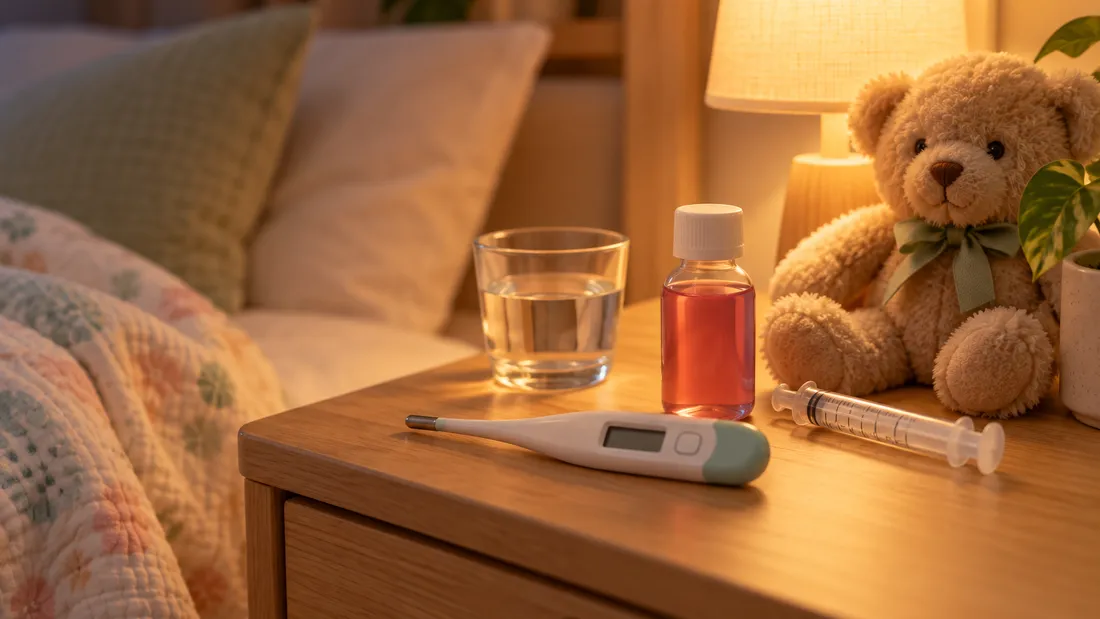
A fever is a temperature of 38°C or higher. Most fevers in children come from viruses and settle in 2 to 3 days. Bring your child in straight away if they are under 3 months old with any fever, if the fever lasts more than 2 days, or if they are drowsy, not drinking, or have a rash. In Sabah, keep dengue in mind with any high fever: give paracetamol only, and avoid ibuprofen until dengue has been ruled out.
First, how your child is acting matters more than the number
A child with 39°C who is still playing and drinking is often less worrying than a child with 38°C who is floppy and will not drink. Fever on its own does not harm the brain. It is the body's normal way of fighting infection. Watch your child, not only the thermometer.
Dengue: up by half in Sabah this year
Sabah recorded 2,866 dengue cases up to 13 June 2026, 50% more than the same time last year, and 23 deaths. Kota Kinabalu, Penampang and Putatan are among the districts with the most cases.
Dengue starts with a sudden high fever that lasts 2 to 7 days, often with headache, pain behind the eyes, body and joint aches, vomiting and sometimes a rash. The dangerous time is when the fever comes down, usually between day 3 and day 7. Parents can think their child is getting better just as the warning signs appear.
Dengue warning signs. Go to a hospital emergency department straight away if your child has:
- stomach pain, or vomiting again and again
- bleeding from the gums or nose, or black stools
- unusual sleepiness, or restlessness and irritability
- cold, pale or clammy hands and feet
- fast or difficult breathing
- no urine for 4 to 6 hours
A dengue blood test (NS1) picks up the virus best in the first days of fever, and a full blood count shows the platelet and blood cell levels the doctor watches. We do both at the clinic, day and night.
HFMD (hand, foot and mouth disease)
HFMD is common in children under 5 and spreads fast in nurseries and kindergartens. In the first months of 2025, Sabah had more than 4,300 cases, and Kota Kinabalu had the most of any district.
- It starts with a fever, sore throat and a child who refuses food.
- Painful sores follow inside the mouth, then spots or small blisters on the palms, soles of the feet and the bottom.
- It spreads through saliva, blister fluid and stools, so wash hands well after nappy changes.
- Keep your child home until they are fully well and the blisters have dried. Most children recover in 7 to 10 days.
The main risk is dehydration, because swallowing hurts. Cold water, milk and soft food help. Go to hospital if your child stops drinking, has very few wet nappies, is very sleepy, has jerky movements, or keeps vomiting.
Flu
Flu brings a sudden fever with cough, runny nose, sore throat and body aches, and children often seem more tired than with a cold. Children with flu can spread it for longer than adults. A yearly flu shot is the best protection from 6 months old. Read our guide on flu symptoms and the flu shot.
Dengue, HFMD or flu: side by side
| Dengue | HFMD | Flu | |
|---|---|---|---|
| Fever | Sudden and high, 2 to 7 days | Mild to moderate, 1 to 3 days | Sudden, 3 to 5 days |
| Other signs | Pain behind eyes, aches, vomiting, rash | Mouth sores, spots on hands, feet and bottom | Cough, runny nose, sore throat, aches |
| Who gets it | All ages | Mostly under 5 | All ages |
| Danger time | When the fever drops, day 3 to 7 | Not drinking | Breathing trouble |
What to do at home tonight
- Measure properly. A digital thermometer under the arm works for all ages.
- Paracetamol brings the fever down and makes your child comfortable. Give the dose for their weight on the bottle, every 4 to 6 hours, and no more than 4 doses in 24 hours.
- Avoid ibuprofen (Nurofen) and mefenamic acid (Ponstan) while dengue is possible, because they raise the risk of bleeding. Never give aspirin to children.
- Give fluids often. Small sips every few minutes, breastfeeds, milk, water or oral rehydration salts.
- Dress them lightly. A thin layer and a fan on low. Do not wrap a feverish child in blankets.
- Sponging with lukewarm water is fine if it comforts them. Never use cold water, ice or alcohol rubs.
- You do not need to wake a sleeping child just to give medicine.
Fever fits (febrile seizures)
Some children between 6 months and 5 years old have a fit when their temperature rises fast. It is frightening to watch, but most stop within 5 minutes and do not cause harm.
- Lay your child on their side on a safe surface. Do not put anything in their mouth.
- Time the fit.
- Call 999 if it lasts more than 5 minutes, or your child does not wake up properly afterwards.
- After a first fit, always bring your child to a doctor.
Call 999 or go to a hospital emergency department if your child:
- has a fit lasting more than 5 minutes
- is struggling to breathe, or has blue or grey lips
- is floppy, or very hard to wake
- has a rash that does not fade when you press a glass against it
- has a stiff neck, or shows any dengue warning sign above
Bring your child to a doctor tonight if they are under 3 months old with a temperature of 38°C or more, or 3 to 6 months old with 39°C or more, if the fever has lasted more than 2 days, if they are drinking much less or have fewer wet nappies, if they have a new rash or ear pain, or if you are worried. You know your child best.
Open all night, every night
Our clinic on Jalan Penampang, Kota Kinabalu has a doctor and a nurse on duty at 3am, the same as 3pm. We can check your child, do a dengue test and blood count on the spot, and tell you plainly whether it is safe to go home.
WhatsApp usor call 088-239 393Questions people ask
What temperature is a fever in a child?
38°C or higher. A temperature between 37.5°C and 38°C is a slight rise, so keep watching.
Should I wake my child to give fever medicine?
No. Sleep helps them recover. Give the next dose when they wake if they still have a fever and seem uncomfortable.
Can I give my child ibuprofen for a fever?
Not while dengue is possible, because ibuprofen raises the risk of bleeding. Use paracetamol until a doctor has ruled dengue out.
When is a fever too high?
Any fever of 40°C or more needs a doctor, and so does any fever in a baby under 3 months. How your child is acting matters as much as the number.

A general practitioner clinic for the whole family, from babies to grandparents. A doctor and a nurse are on duty every hour of every day, and you can walk in without an appointment. Meet the team
Sources
- Ministry of Health Malaysia: Home care advice for dengue patients
- Asia News Network, 15 June 2026: Dengue cases in Sabah jump by over 50%
- The Vibes: Five Sabah schools closed as HFMD cases surge past 4,000
- NHS: High temperature (fever) in children
- NHS: Febrile seizures
- NHS: Hand, foot and mouth disease
This article is general health information and does not replace a visit to the doctor. If you are worried about yourself or your child, see a doctor.